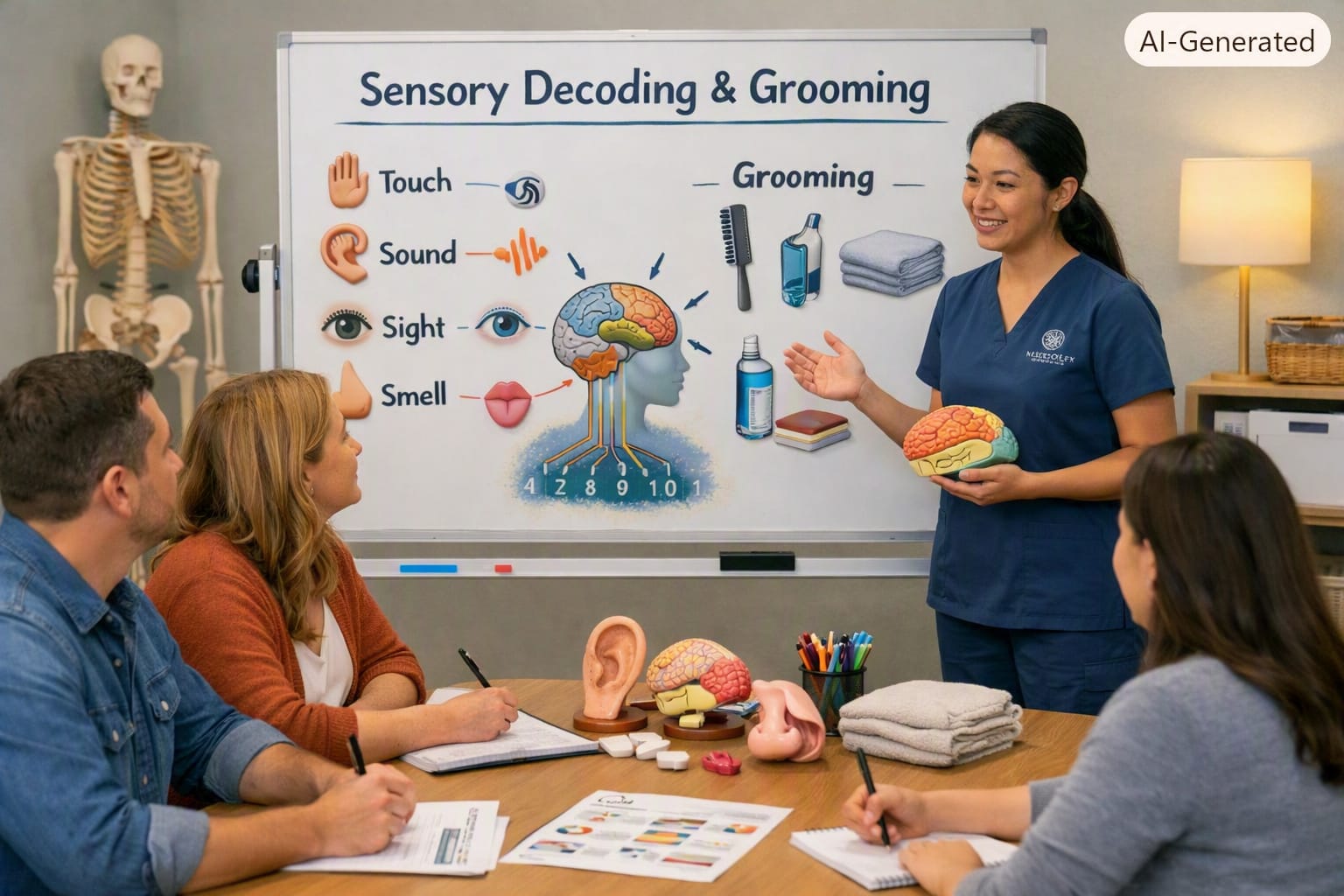
Many children in Mauritius with mild to moderate neurodivergence remain unrecognized because their struggles are often mistaken for other behaviors.
Signs are often misunderstood
Struggling children are not always the ones disrupting class or falling behind. They are often the quiet children who daydream, appear careless or "lazy," or are labeled difficult for refusing to participate in specific activities.
Behaviors can be misinterpreted
Rather than obvious meltdowns, children with sensory differences might simply withdraw, cover their ears, become irritable in the afternoons, or refuse to wear uniforms due to fabric sensitivity. These actions are frequently mistaken for shyness or defiance.
Systemic challenges
In large classes with limited resources, teachers often lack the time or specialist support to distinguish between behavioral issues and neurological needs. Consequently, a child in need of occupational therapy may be sent to detention instead.
The home vs. school gap
A child with subtle sensory or autism-related challenges may cope well at home in a controlled environment but struggle in the busy, loud setting of a school. This creates the false appearance of a child who is "fine" at home but "acting out" at school, when the school environment is actually exposing a pre-existing need.
Moving toward clarity
This is not a criticism of teachers, who work under significant constraints, but rather a gap NeuroFlex aims to help close. The first step is awareness: realizing that a struggling child is rarely choosing to do so.
If these descriptions sound familiar, the glossary on the NeuroFlex site is a helpful starting point, and seeking a professional assessment can provide the clarity needed to improve a child’s school experience.