Child Centred Play Therapy (CCPT)
The child leads the session and chooses how to play. This gives back a sense of control that hard experiences often take away.

Practical knowledge
How the natural language of play helps children, and adults, feel understood and grow.
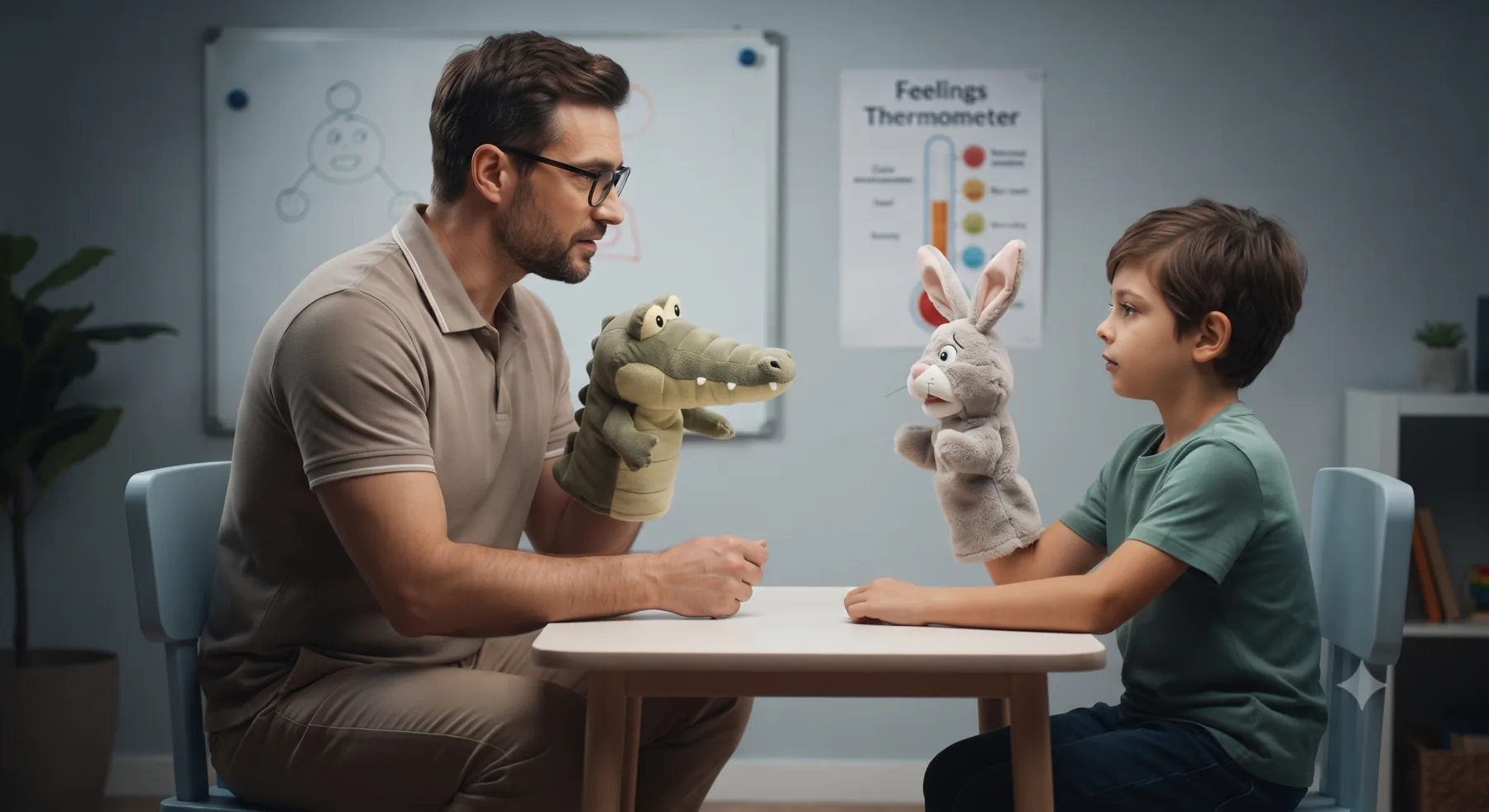
Play therapy is an evidence based approach that uses the natural language of play to help children, and increasingly adults, make sense of their feelings, work through difficult experiences, and build resilience. Because it does not depend on putting feelings into precise words, it reaches people who find ordinary talking therapy hard.
Play is sometimes called a biological necessity. It engages several parts of the mind at once, which is part of why it helps a child settle, learn, and process what has happened to them. The point is rarely the finished game or drawing. It is the doing.
Different ways a therapist can work with a child, each suited to different needs and personalities.
The child leads the session and chooses how to play. This gives back a sense of control that hard experiences often take away.
Uses play to teach specific skills, strategies, and ways of thinking that help change behaviour.
The child builds small scenes in a tray of sand using miniature figures, giving shape to thoughts that are hard to say out loud.

Strengthens the bond between parent and child through structured, playful, physical interaction.

Focuses on connection, self awareness, and quiet confidence.

One person draws a random squiggle and the other turns it into a picture. It loosens the imagination.

Colouring or drawing inside a circle helps calm the body and steady attention.

A child draws a comic about a hero who faces the same challenge they do, which gives them a little distance from the problem.

Drawing a wheel of different feelings helps build a richer emotional vocabulary.

Drawing around the child on large paper and filling the outline with their strengths and kind words builds self esteem and body awareness.

This is general information, not a diagnosis or a treatment plan. A qualified therapist can advise on what suits a particular child.