The Sensory Spectrum
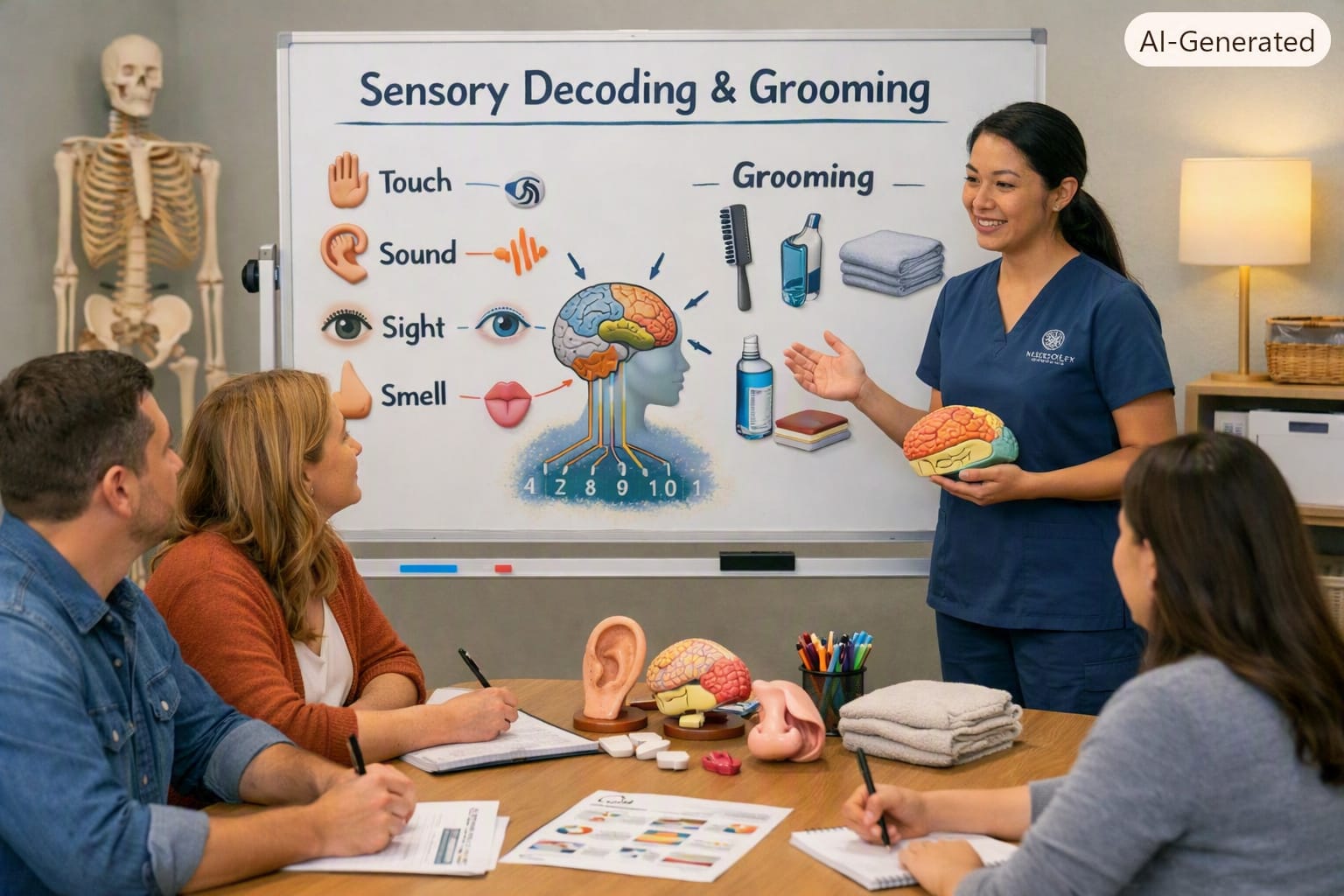
Many autistic people process the senses differently, and can be over-sensitive (hyper) to some inputs and under-sensitive (hypo) to others, often simultaneously. A child might find background noise, bright or flickering light, clothing seams, or strong smells genuinely painful, while actively seeking out deep pressure, movement, or intense flavours that provide grounding comfort.
Beyond the Five Senses
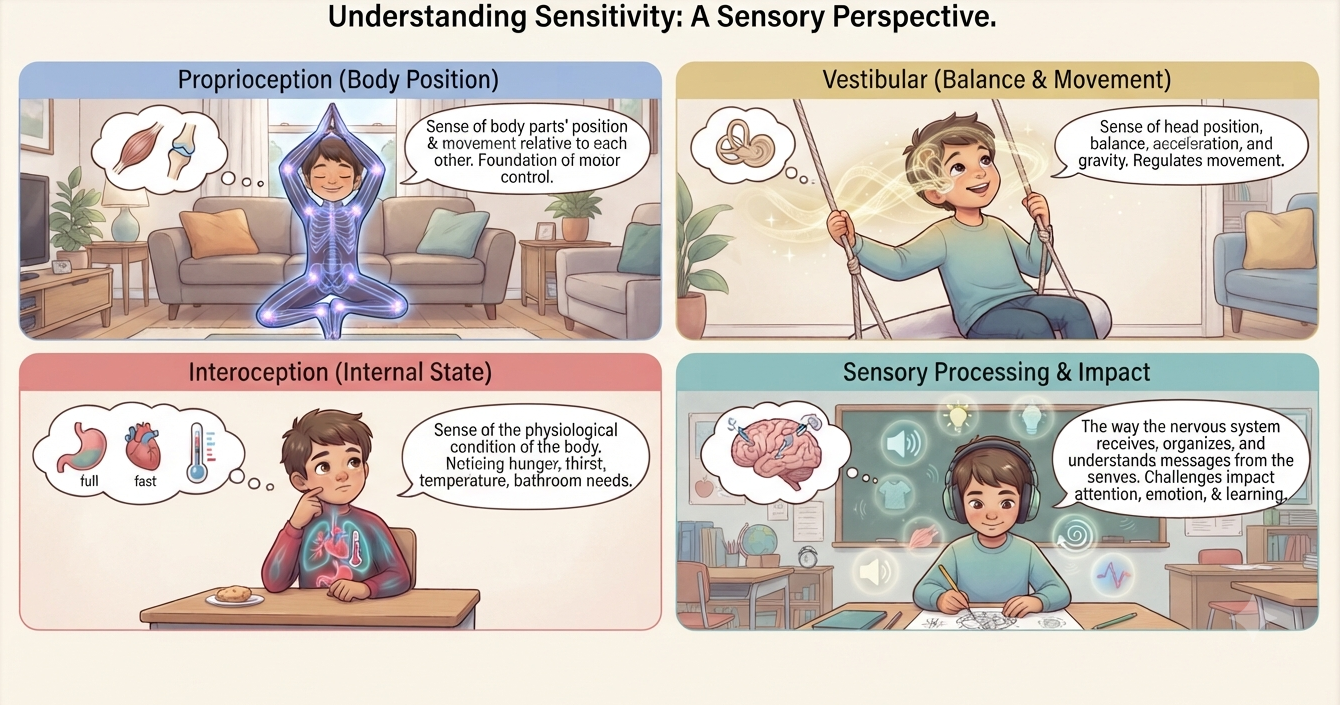
Sensory processing reaches beyond the familiar five senses:
Proprioception: The sense of body awareness through muscles and joints; this explains why firm pressure and a snug hug can feel profoundly calming.
Vestibular Sense: Governed by the inner ear, this system manages balance and movement; activities like swinging or spinning may either soothe or unsettle the nervous system.
Interoception: The vital sense of internal signals, such as hunger, thirst, temperature, or the need for the toilet. Difficulties with this sense mean these signals may go unnoticed until they become urgent.
These are nervous system responses, not behaviour to be corrected.
Strength-Based Support
Unmet sensory needs can quietly affect eating, sleeping, concentration, and mood. However, the same sensory processing profile often comes with real strengths: deep focus, a strong sense of fairness, and the ability to notice details that others miss.
Learning a child’s particular sensory profile is the first step to making a room, a routine, or a classroom comfortable for them.