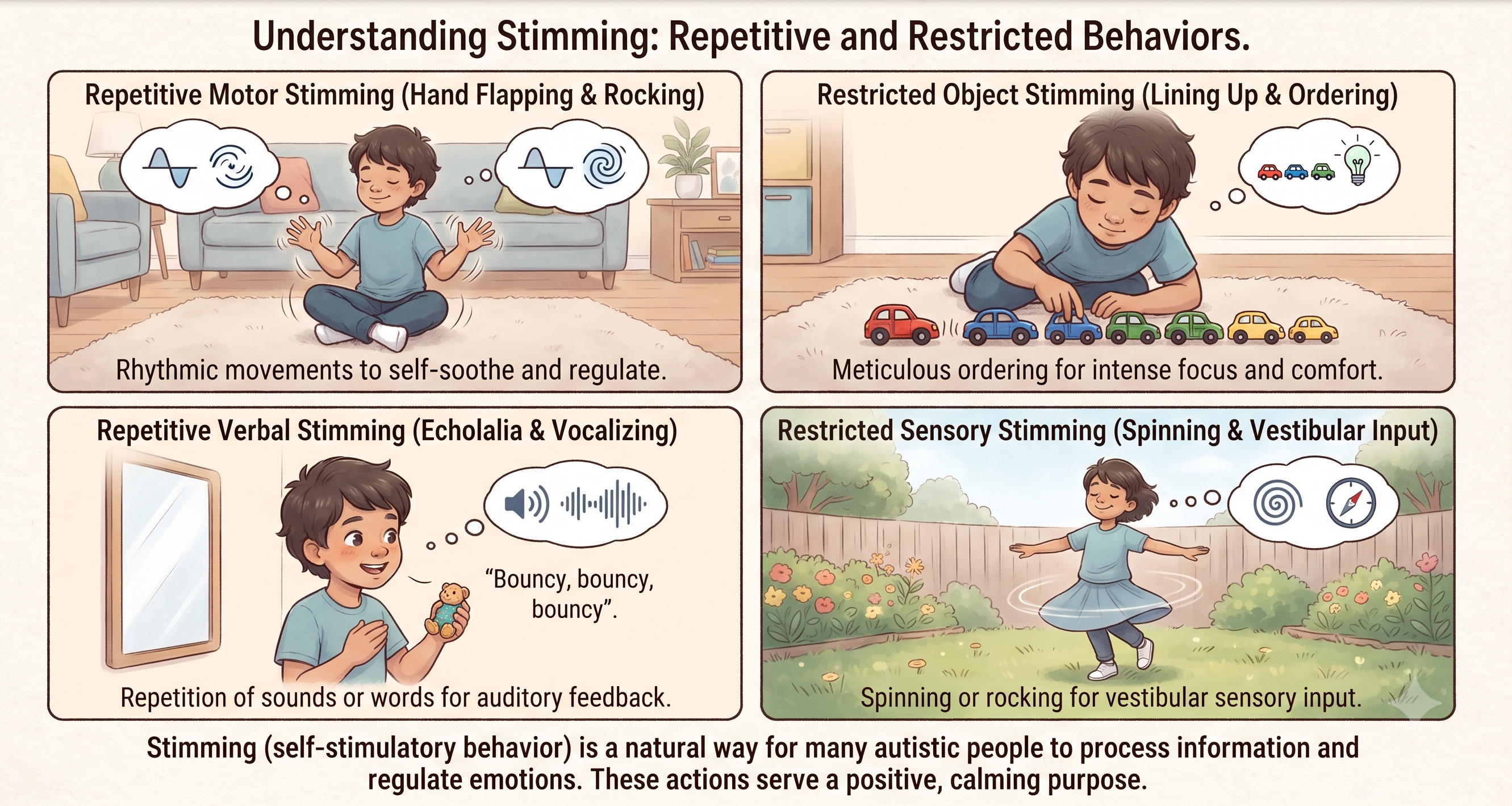
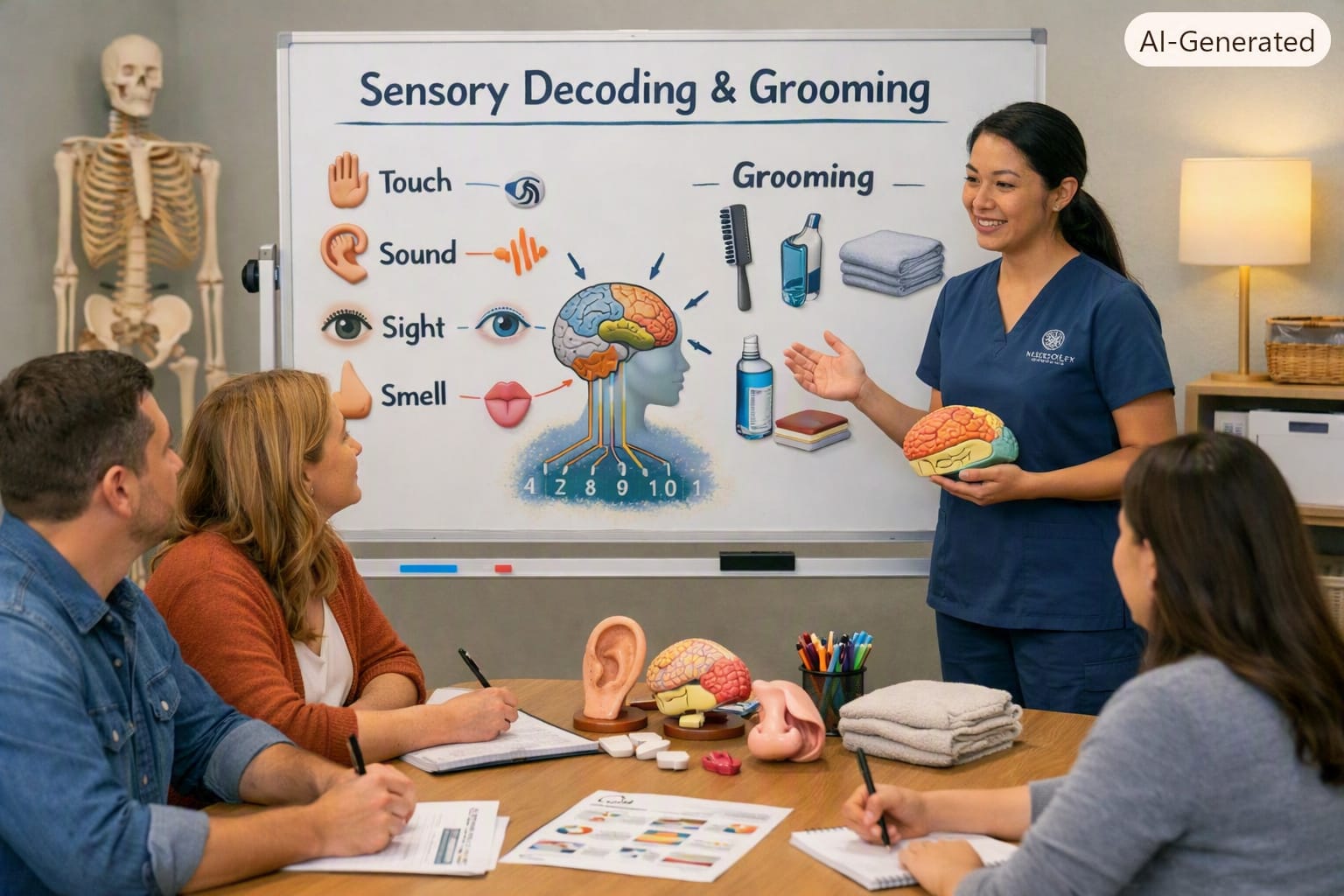
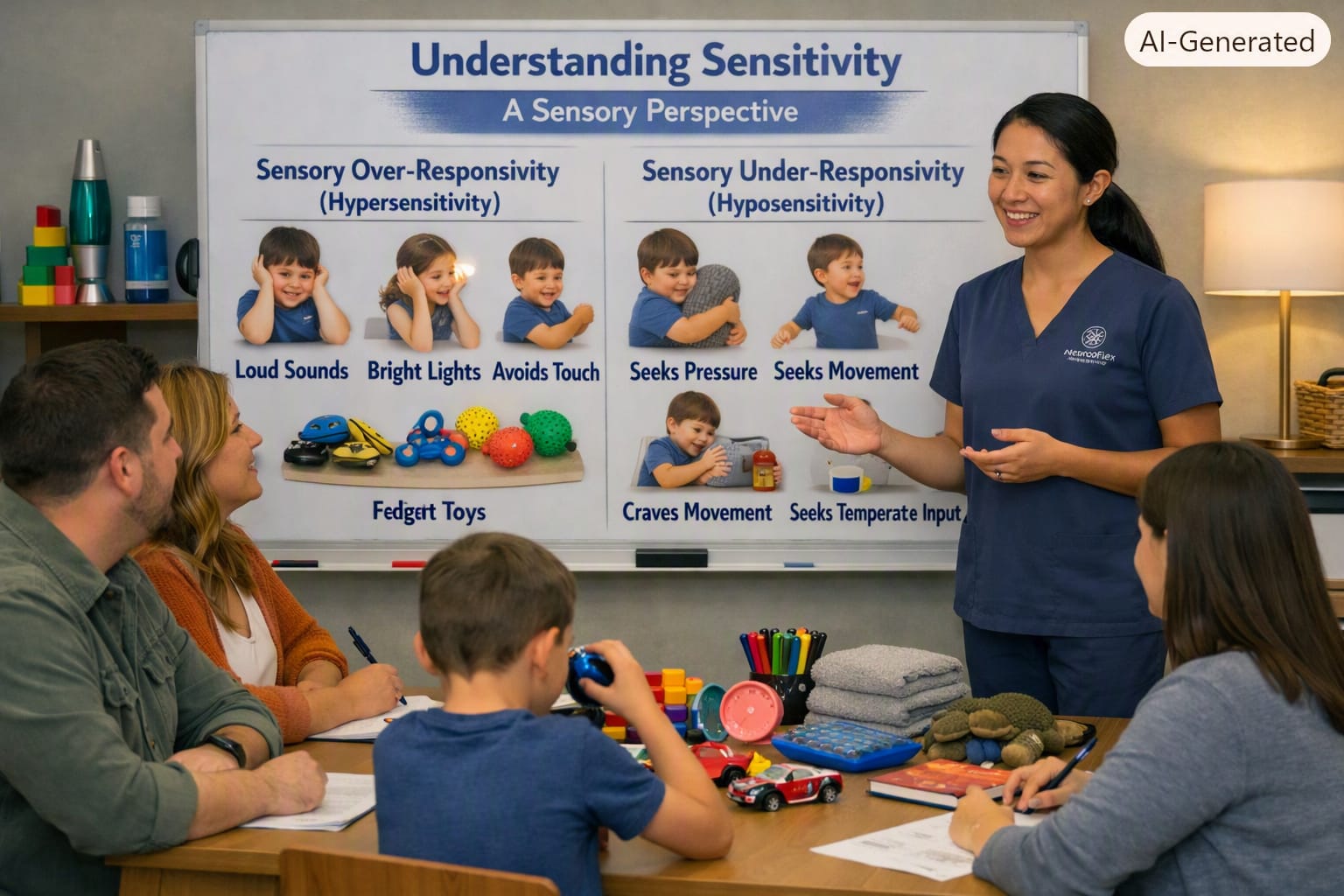
Stimming, short for self-stimulatory behaviour, covers a wide range of repeated movements, sounds, or actions. It is a natural and effective way to self-regulate. Stimming can lift mood, sharpen focus, assist with processing and decision-making, and help manage sensory overload and anxiety. Autistic adults frequently describe how essential this is, and the significant stress caused when they are told to stop.
Categorizing Stimming Behaviors
Observing stimming can be clearer when we categorize these actions. While they all serve regulatory functions, they manifest differently:
Motor Stims (Physical Actions)
Involve movement of the body or interaction with objects: rocking, hand flapping, spinning, bouncing, finger flicking, or lining objects up.
Vocal/Auditory Stims (Sounds and Speech)
Involve repetition of sounds or language: repeating words or phrases (echolalia), humming, or making rhythmic noises.
Visual/Repetitive Stims
Involve focused visual engagement: watching the same video clip again and again, or repeatedly looking at specific light patterns or objects.
A Neuro-Affirming Approach
Because stimming is a vital regulatory tool, it is rarely something to suppress; rather, it is something to understand and accommodate. The exception is a stim that carries a risk of injury. In these instances, the most kind and effective response is a collaborative problem-solving approach: gently offering a safer alternative that meets the exact same sensory need, rather than removing the outlet entirely.